A full redesign of J.Hilburn's pre-appointment client survey — the flow a stylist uses to onboard a new client. And I didn't just design it. I built it in native iOS.
The old survey was a wall of forms and tiny pickers — everything asked at once, before an appointment could even start. I redesigned the whole flow into a calm, one-question-at-a-time experience, with illustrations and real garment photography doing the explaining.
Then I took it past the brief: I built it as a native iOS app — Figma to working Swift, via Claude Code. A rare case of a designer shipping her own work in code.
The old survey asked for everything at once. The redesign asks one question at a time.
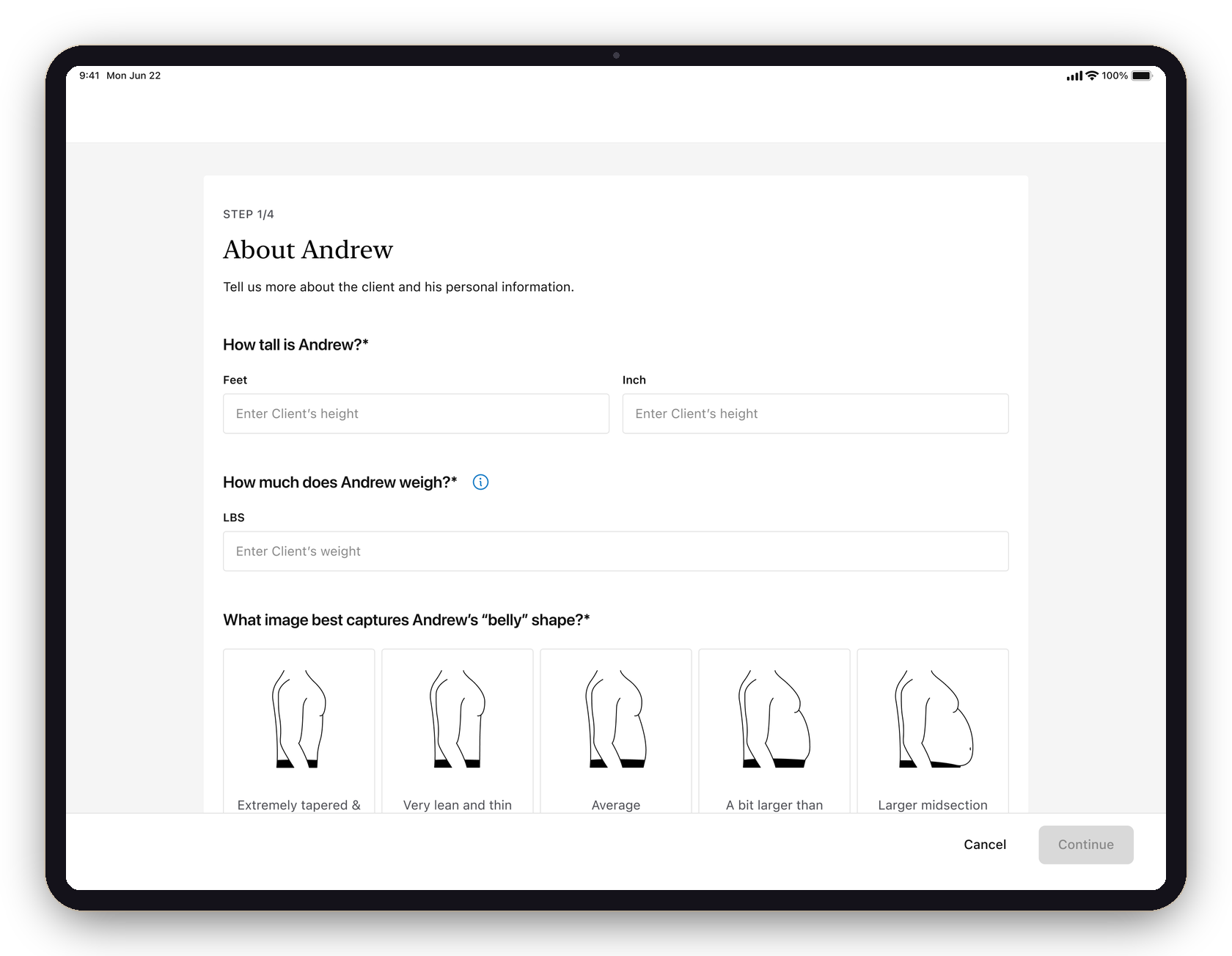
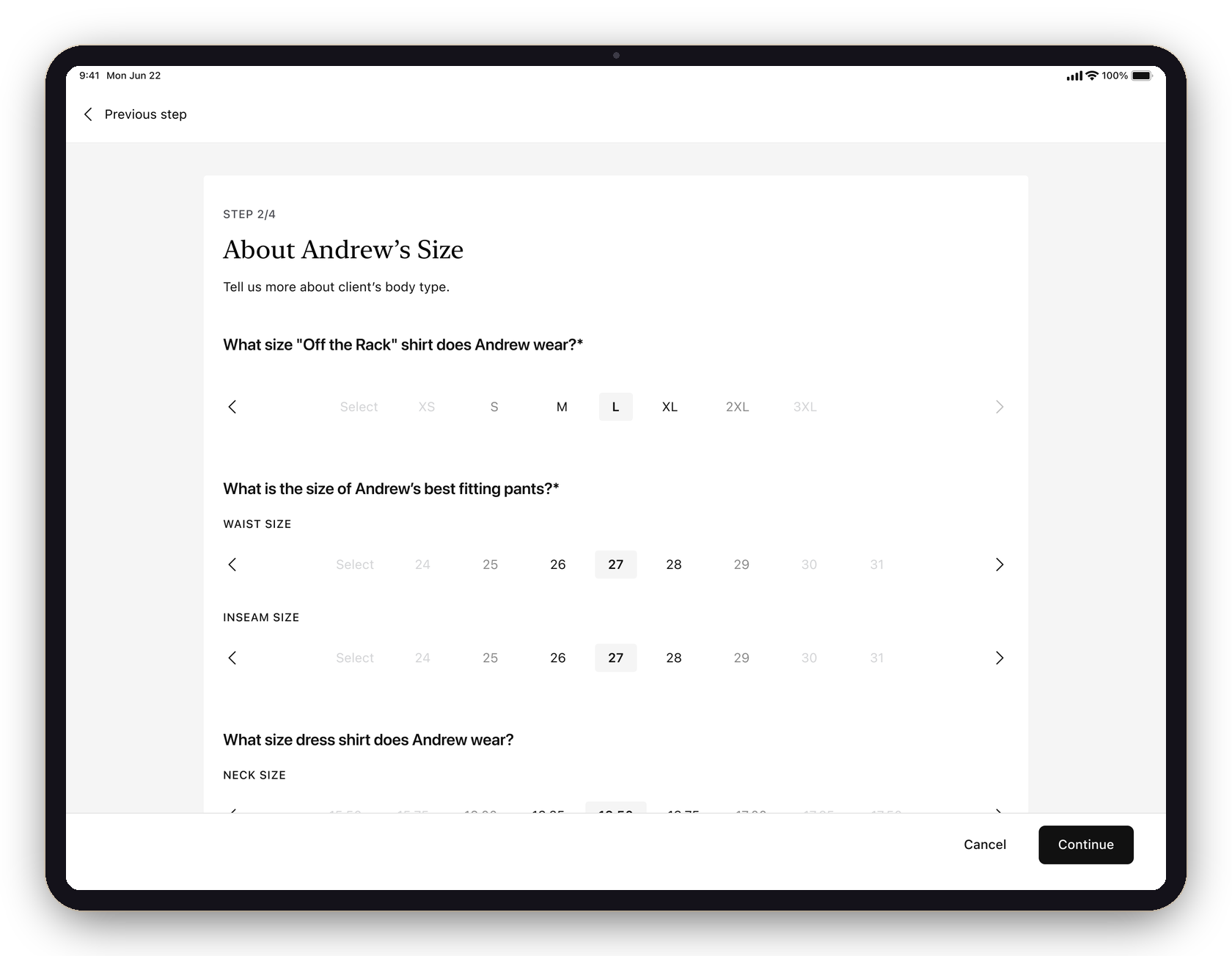
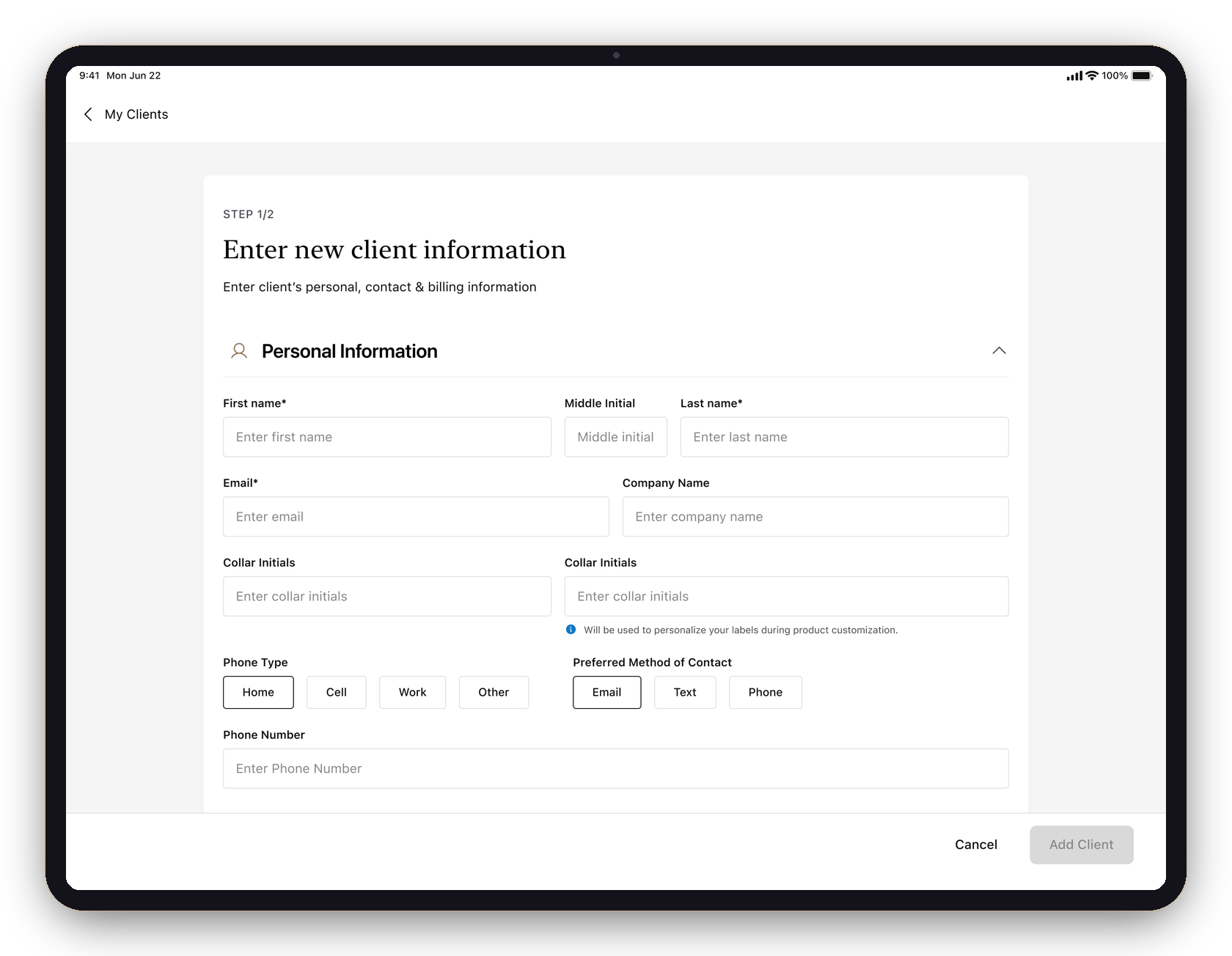
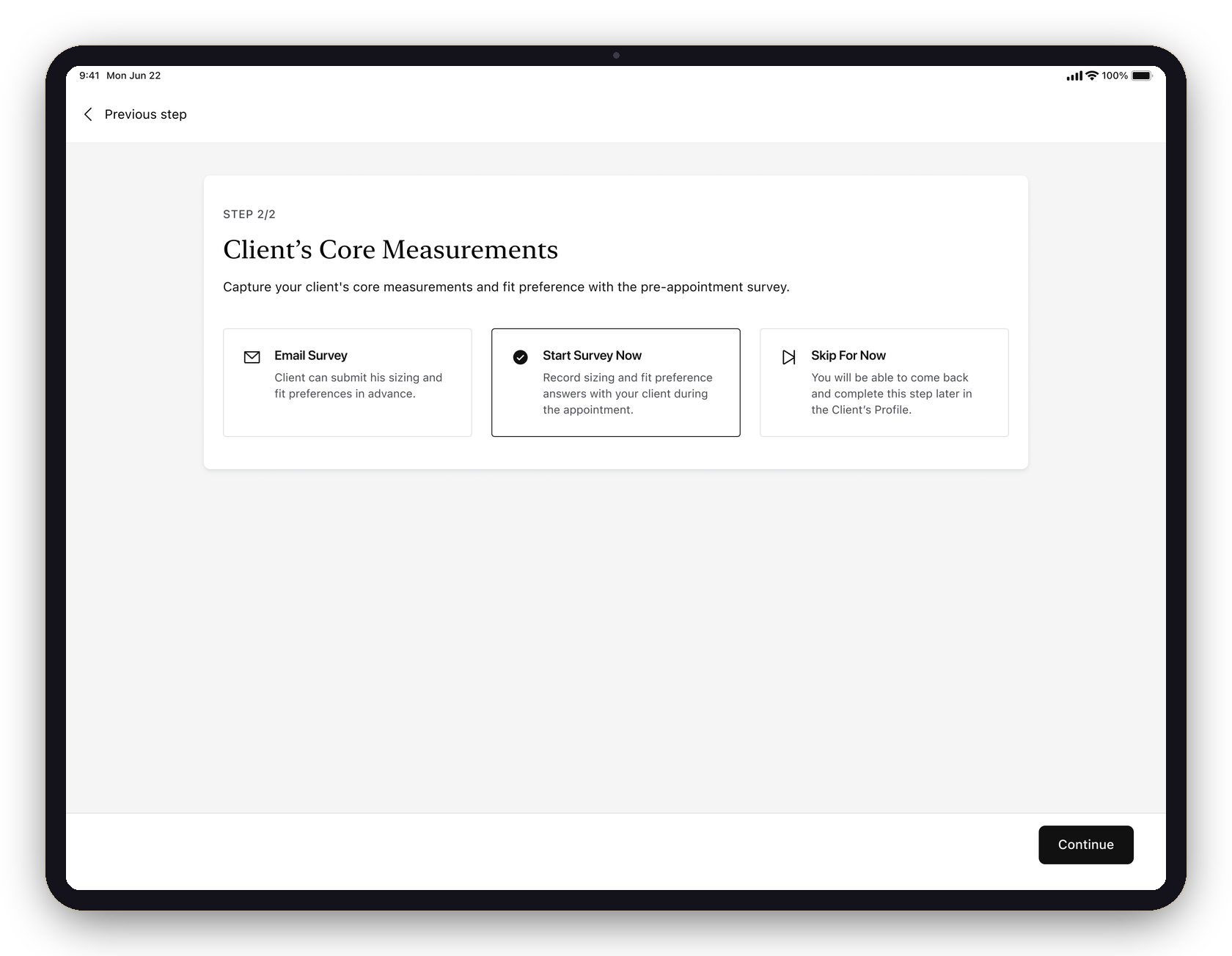
The old intake piled whole categories onto single screens — personal info and billing in one form, then height, weight, body shape, ethnicity and fitness level on the next, then a wall of tiny size pickers, then a long scroll of fit-preference labels. It worked, but it was a form to endure, not a conversation to have.
Old "About Andrew" — six questions on one screen.
Old "Size" — a wall of tiny pickers.
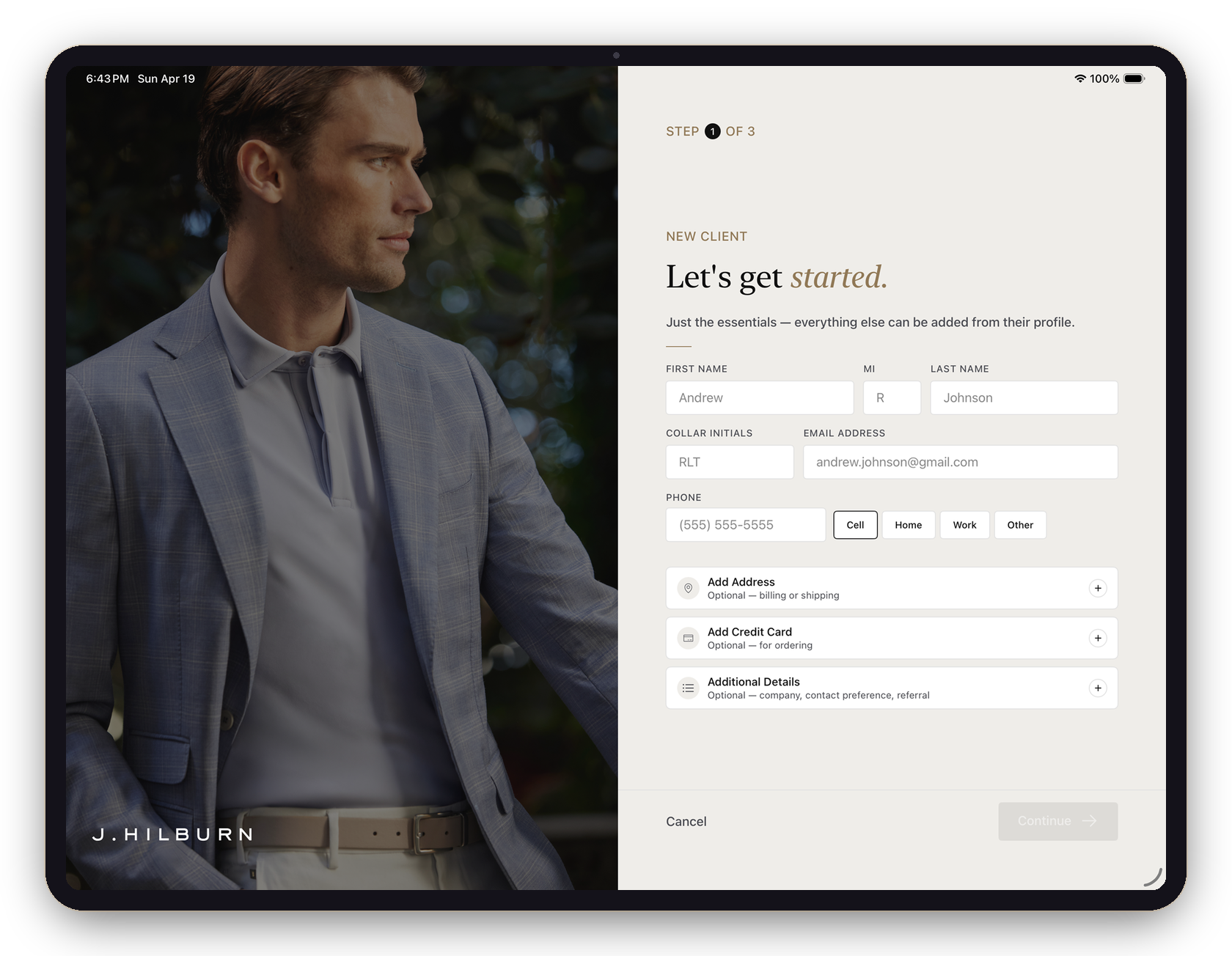
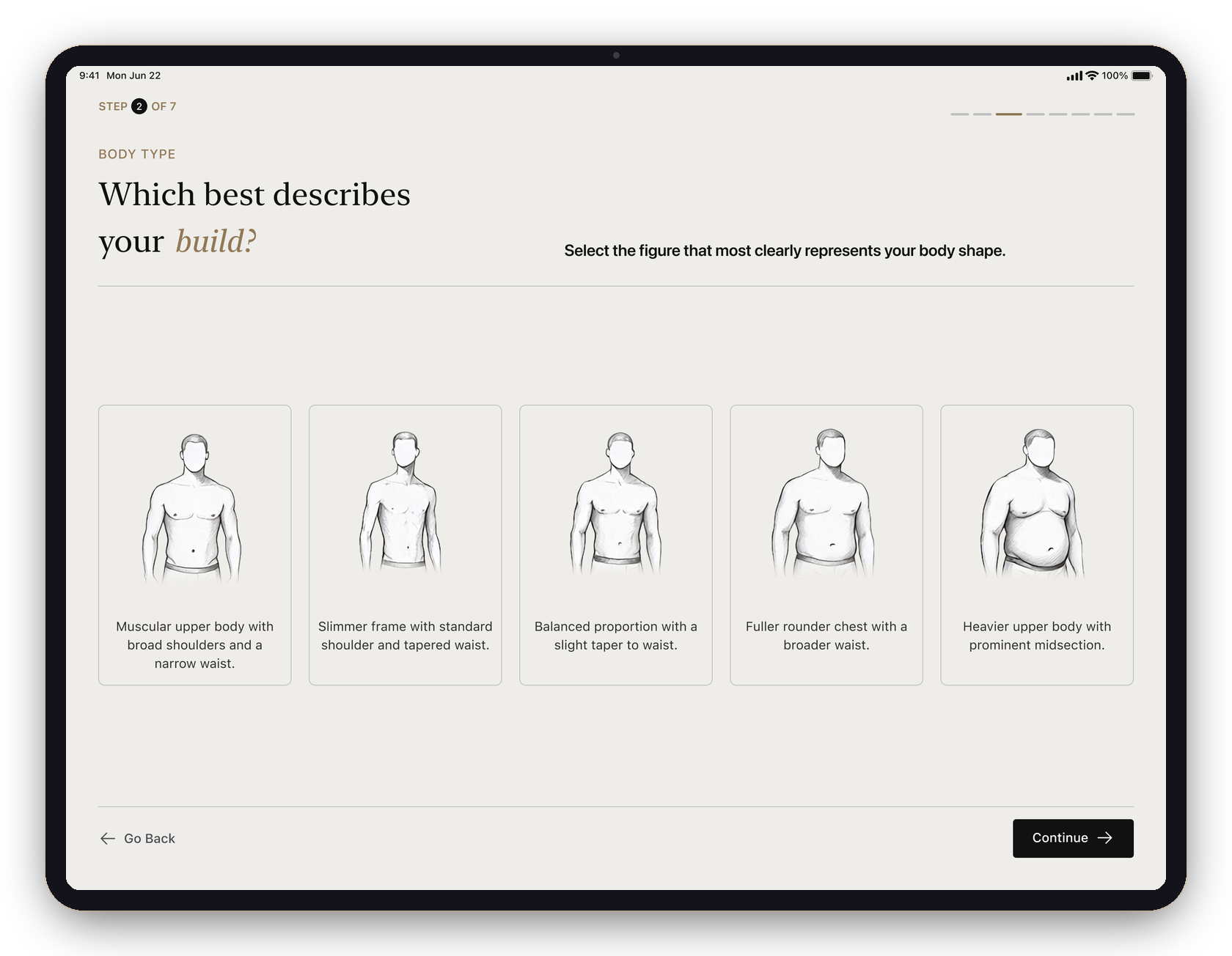
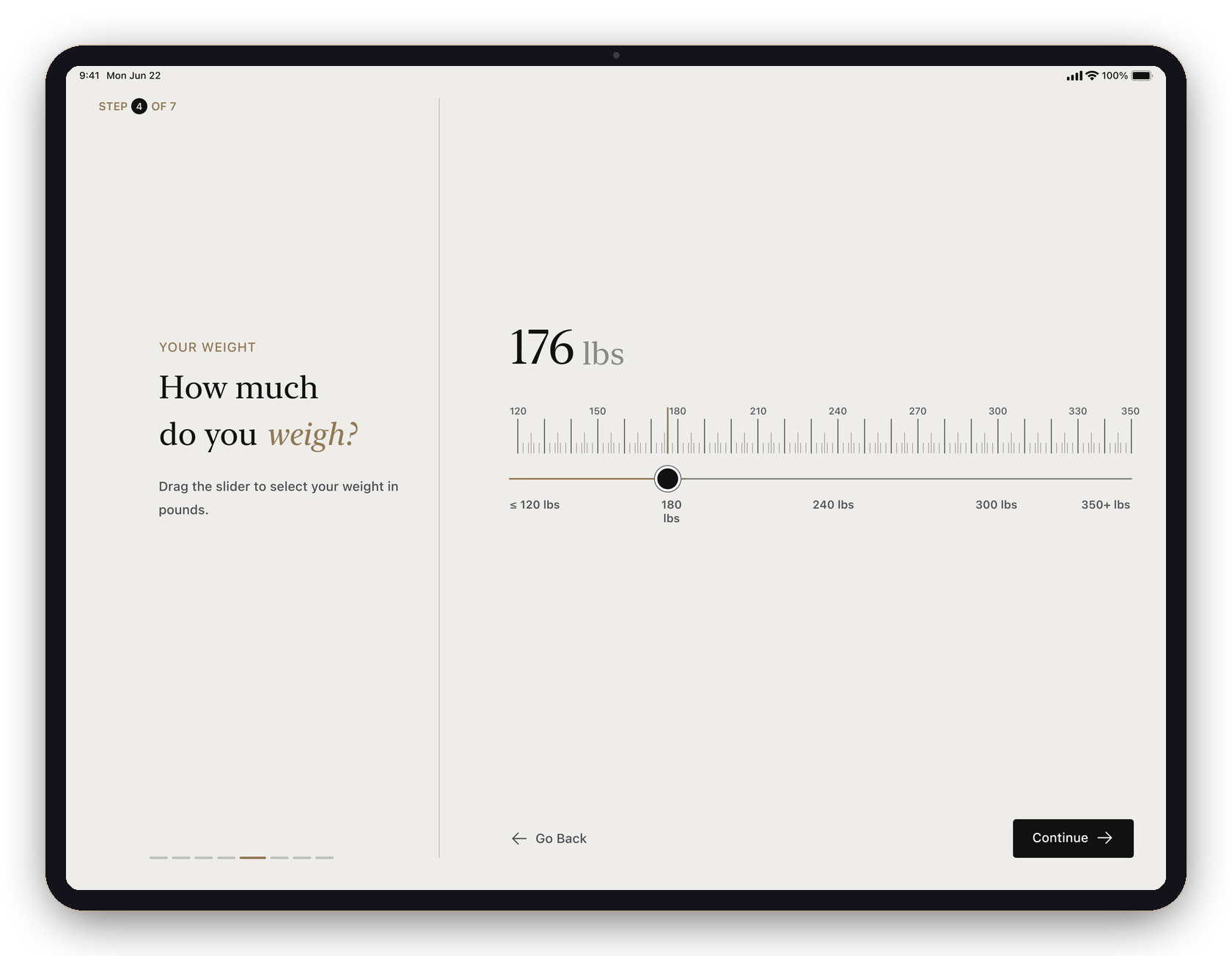
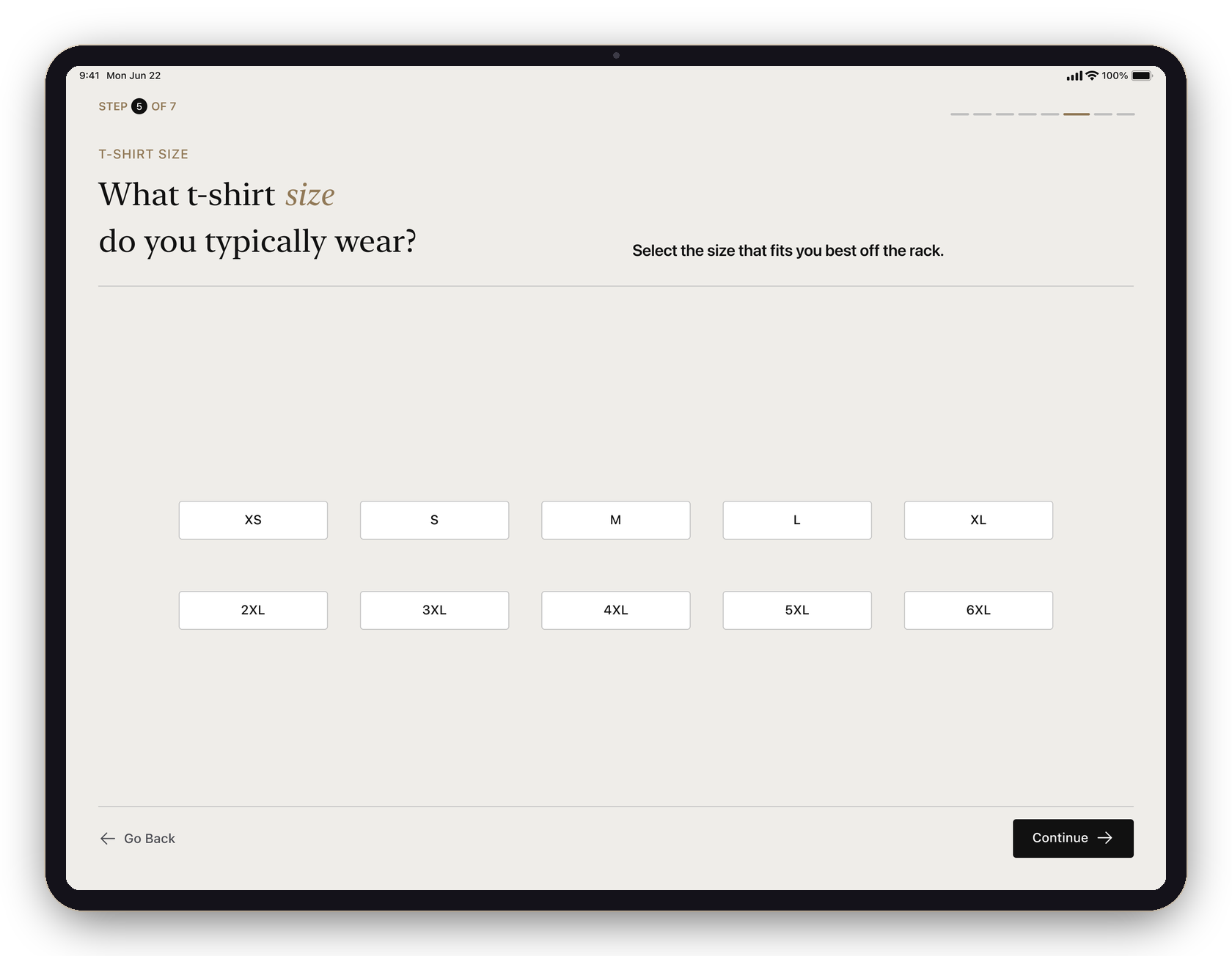
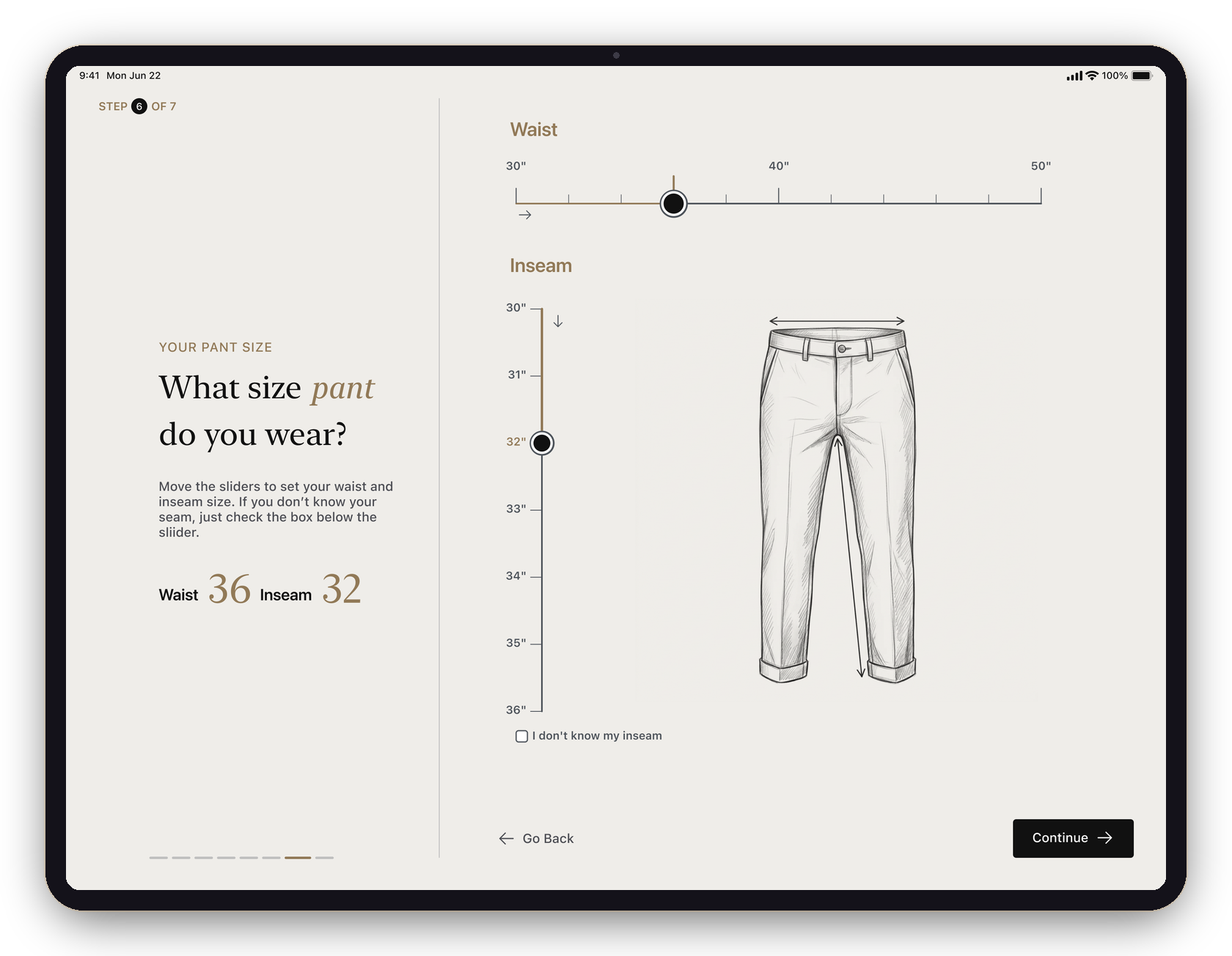
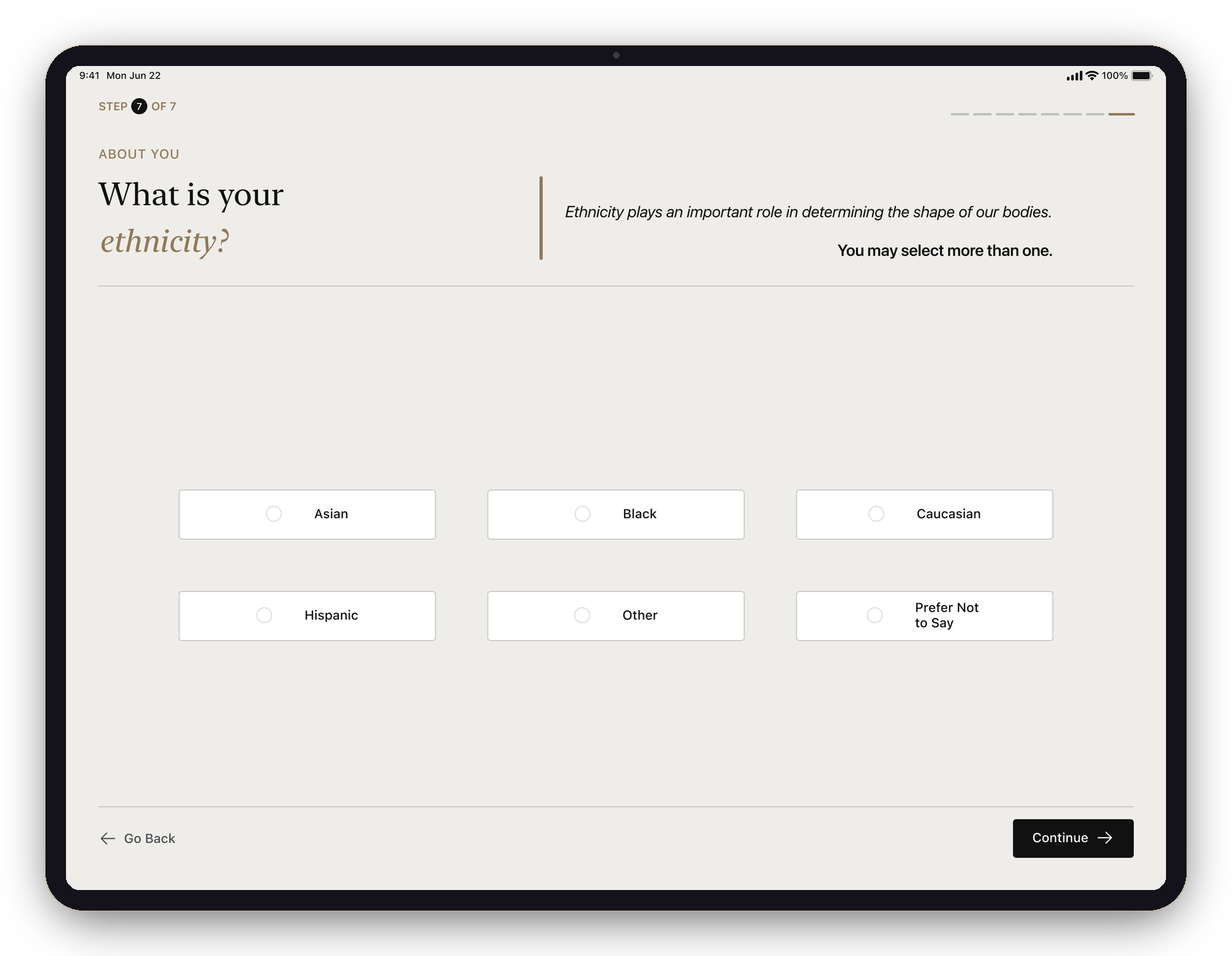
Same information, completely different feel. Every dense screen became a focused step — an editorial headline, one decision, an illustration or a purpose-built control. Here's the before and after, pair by pair.
Before — one dense form, everything required-looking.
After — just the essentials; address, card, company optional.
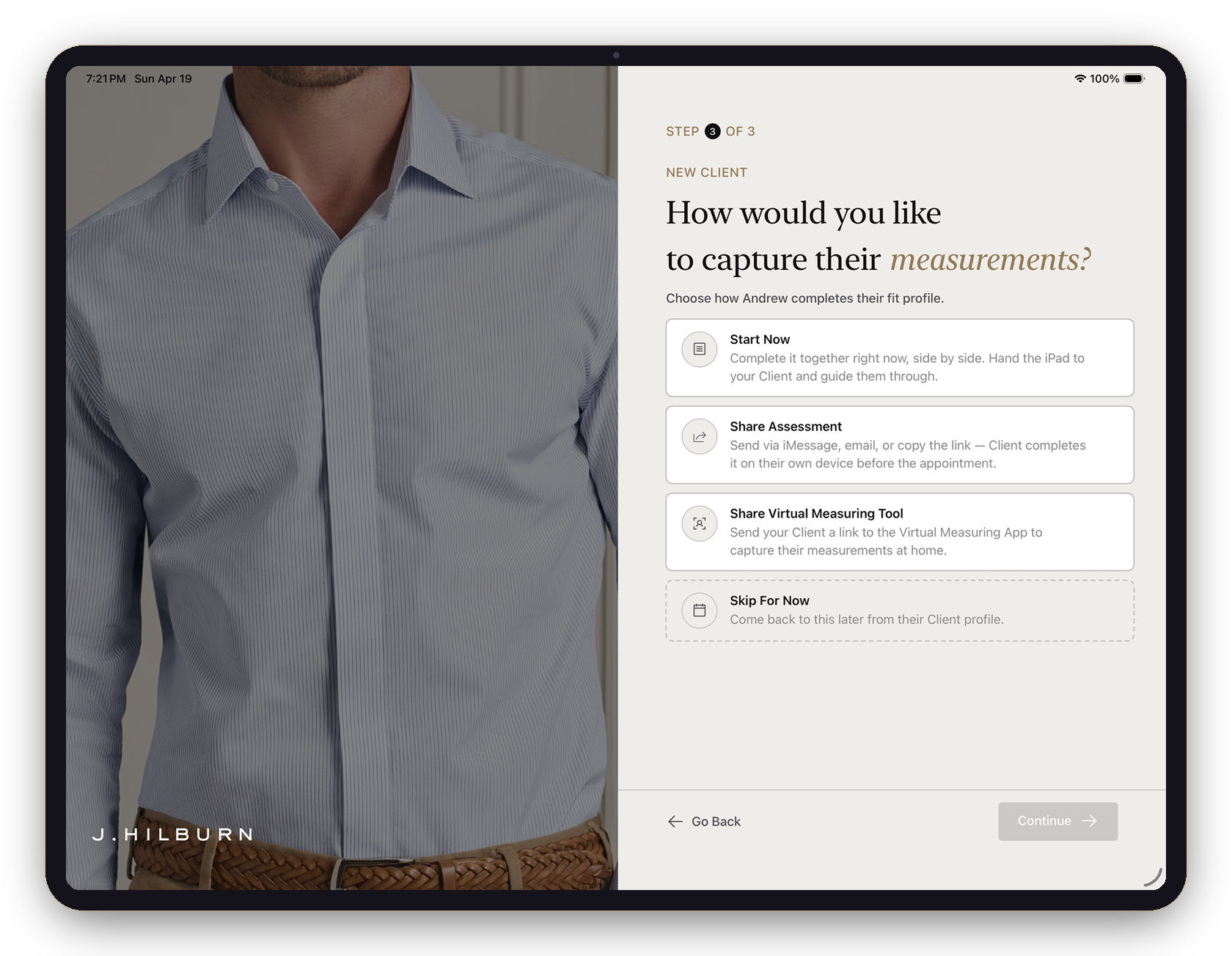
Before — a bare three-card choice.
After — described options, plus a new Virtual Measuring path.
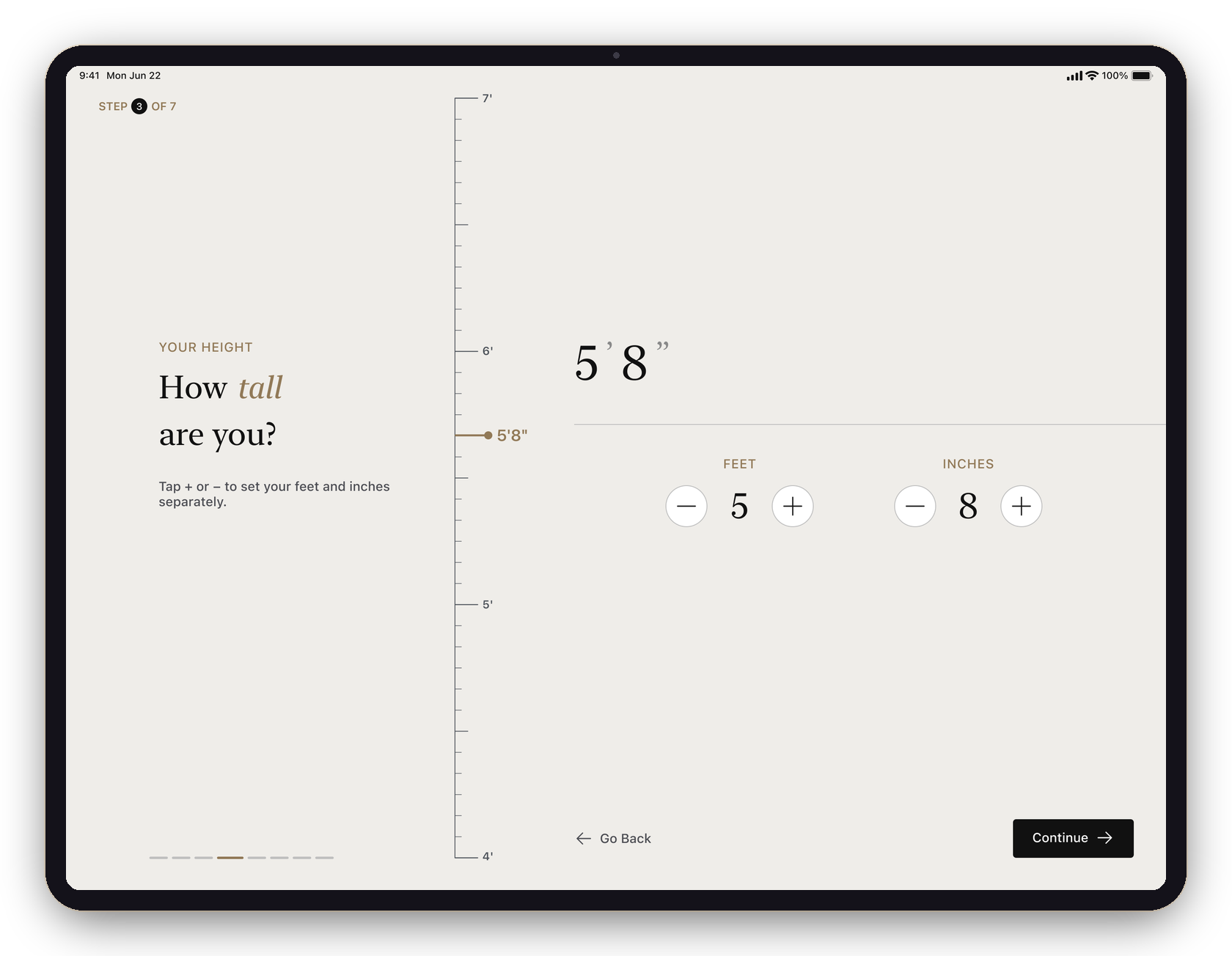
The worst offender — the screen asking six things at once — split into six single-question steps, each illustrated and unhurried.


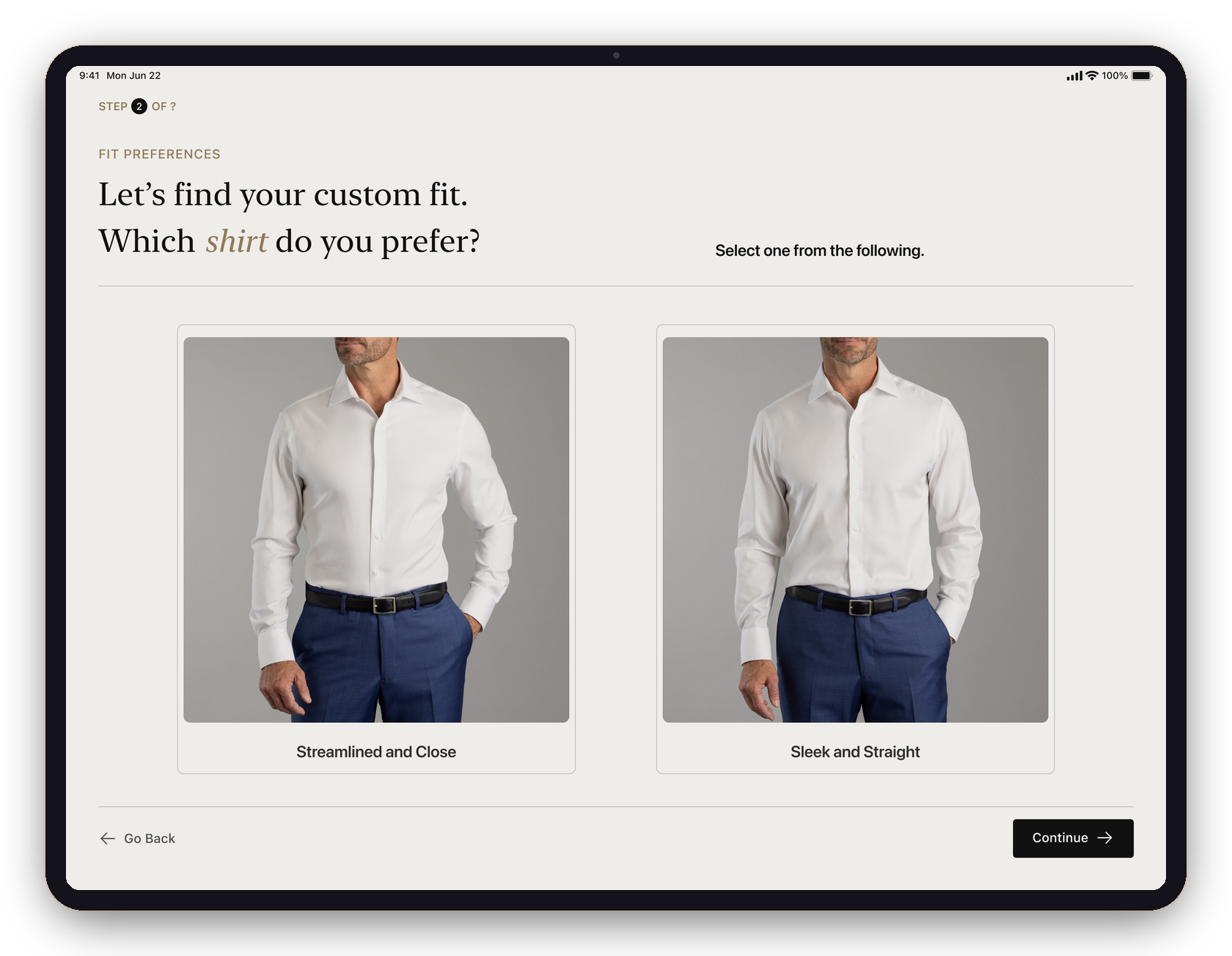
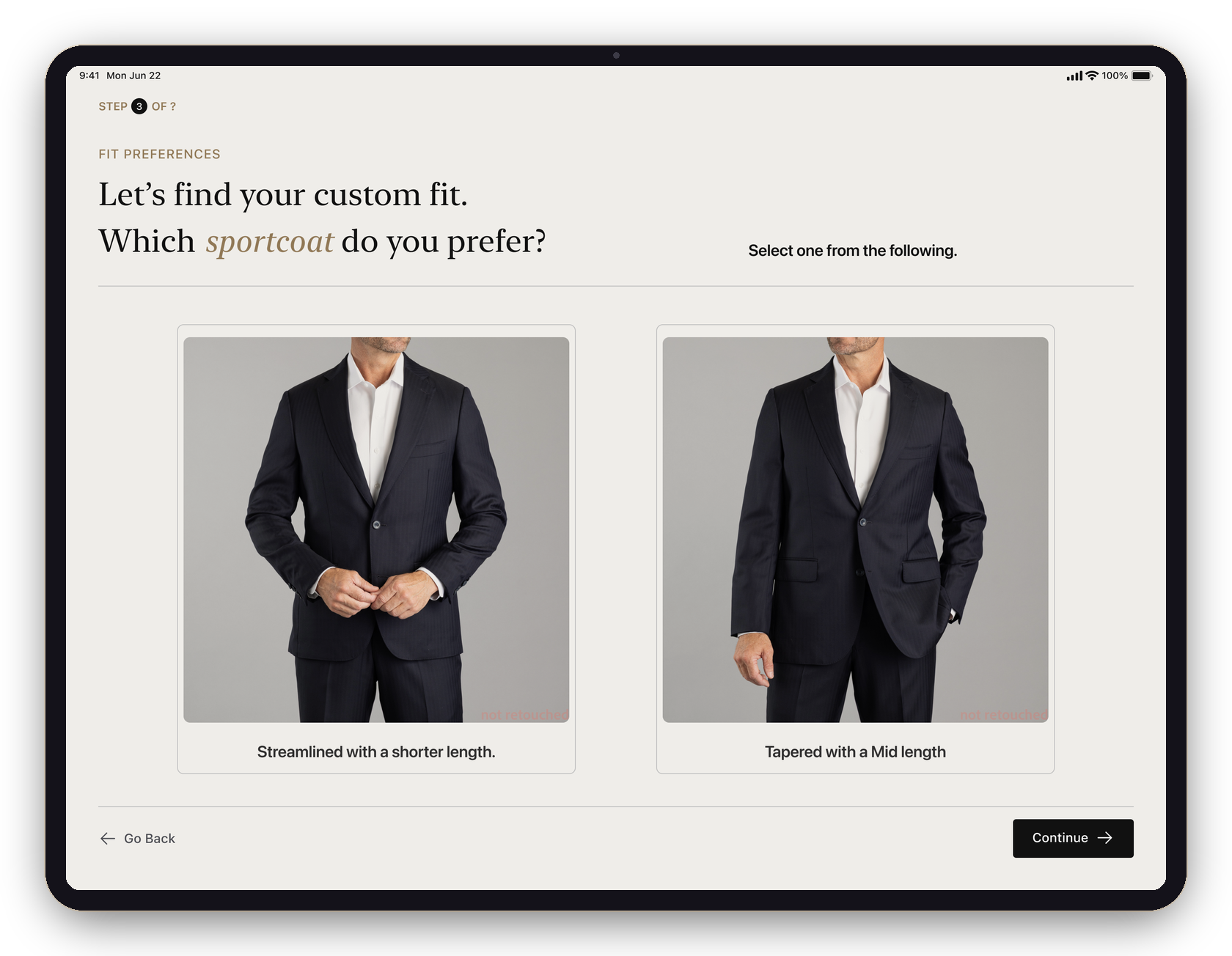
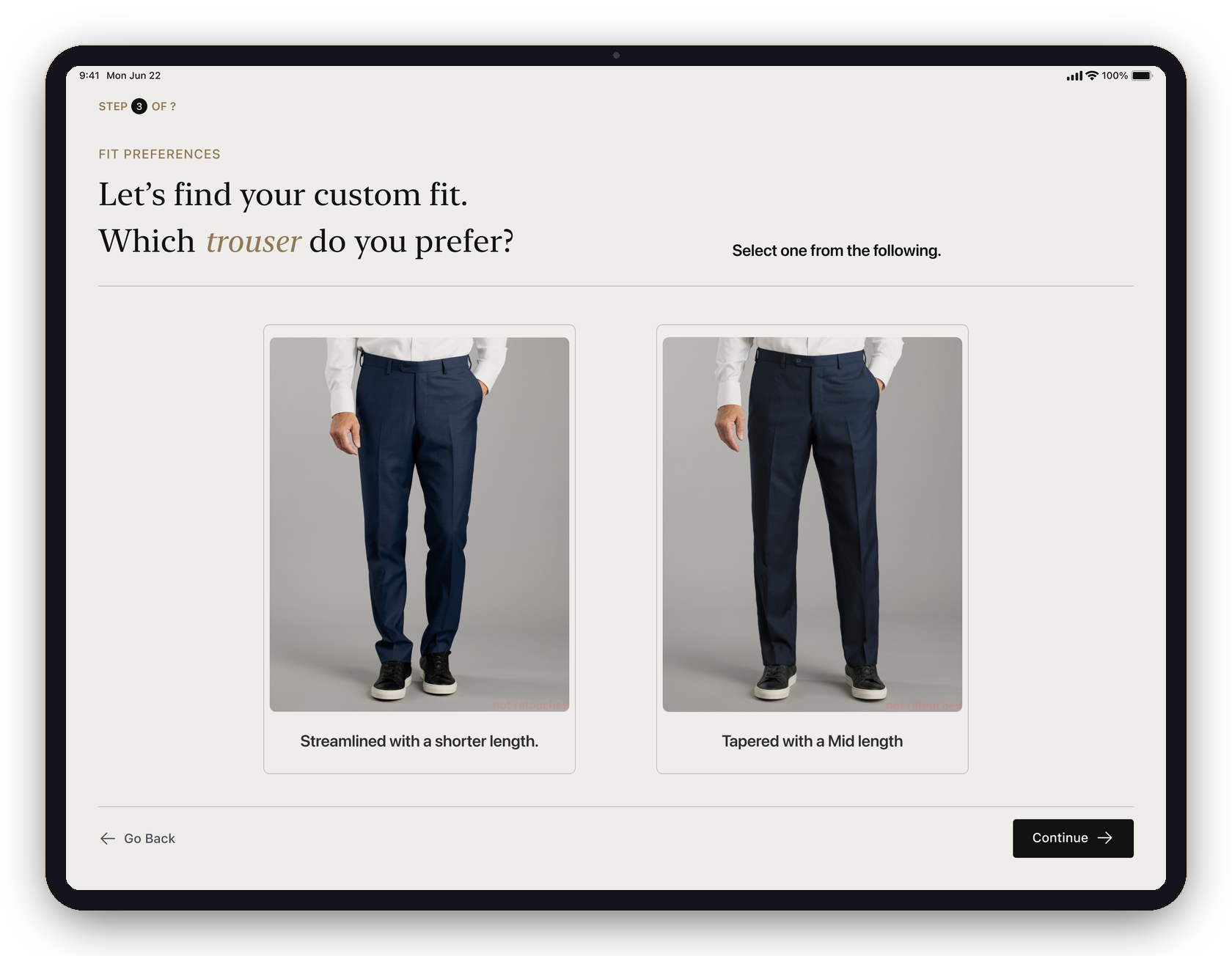
The long fit-preference scroll of slim/trim/classic labels became simple visual A/B choices — the client sees two real fits and picks the one they like.


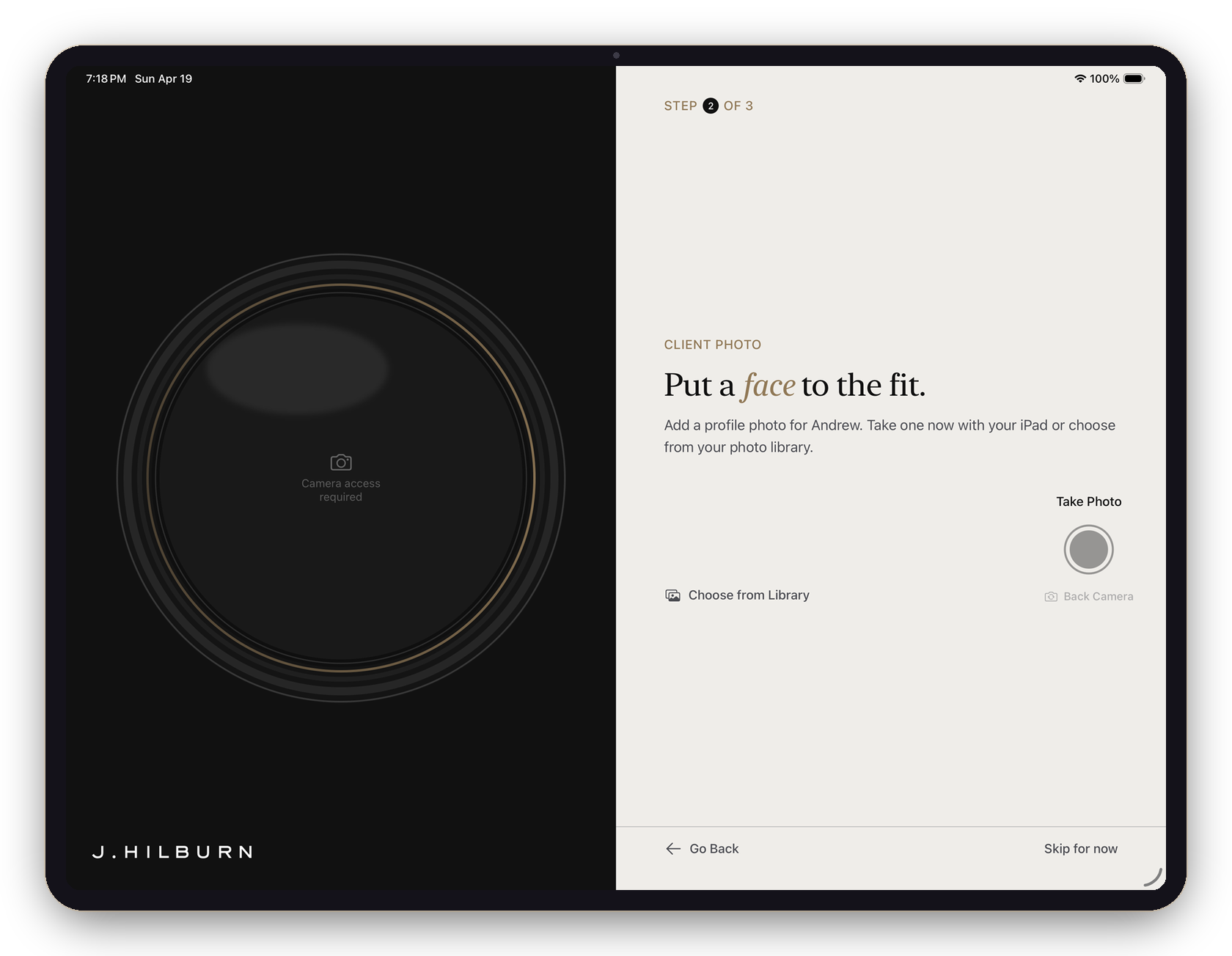
The redesign added an optional client-photo step the old flow never had. The camera lens is rendered as an actual viewfinder into the iPad's camera — a small, warm detail that makes adding a face feel like part of the relationship, not data entry.
Most designers hand a redesign off and hope. I built this one. Using Claude Code, I took the survey from Figma into a working native iOS app in Swift — every step, control, and transition is running code, not a clickable mockup. Two screens were designed directly in code, never in Figma at all.
An interactive walkthrough of the redesigned flow, rebuilt from the Swift app. Step through it the way a stylist would.
The old survey wasn't broken — it just asked too much, too fast. The redesign's whole job was to slow it down: one question, one screen, one decision.
Building it myself changed how I design. When you know you're going to write the Swift, you stop drawing things that can't ship — and you sweat the transitions, the empty states, the keyboard, because they're yours to make work. This is the project I point to first.